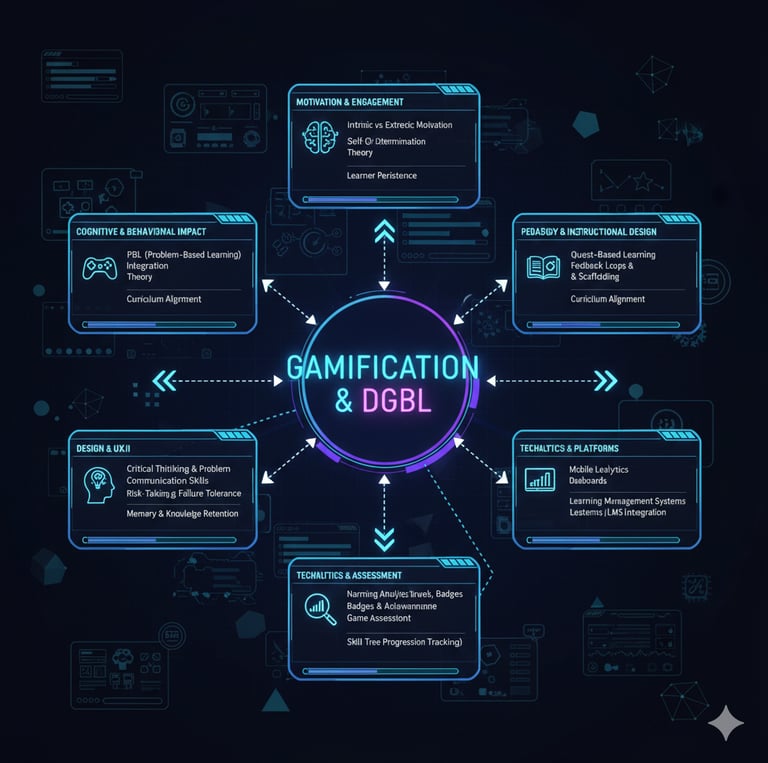
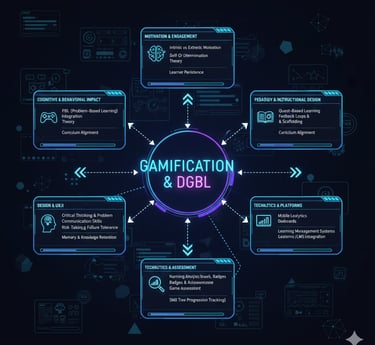
Gamification & Digital Game-Based Learning
This scope investigates the integration of game mechanics—such as levels, challenges, feedback systems, and reward structures—into chemistry instruction. Gamification and DGBL are designed to increase motivation, engagement, and persistence while promoting higher-order thinking and problem-solving skills. Research within this domain evaluates both cognitive outcomes and affective dimensions of learning.


Research Projects:
Android-Based Gamified Learning Application
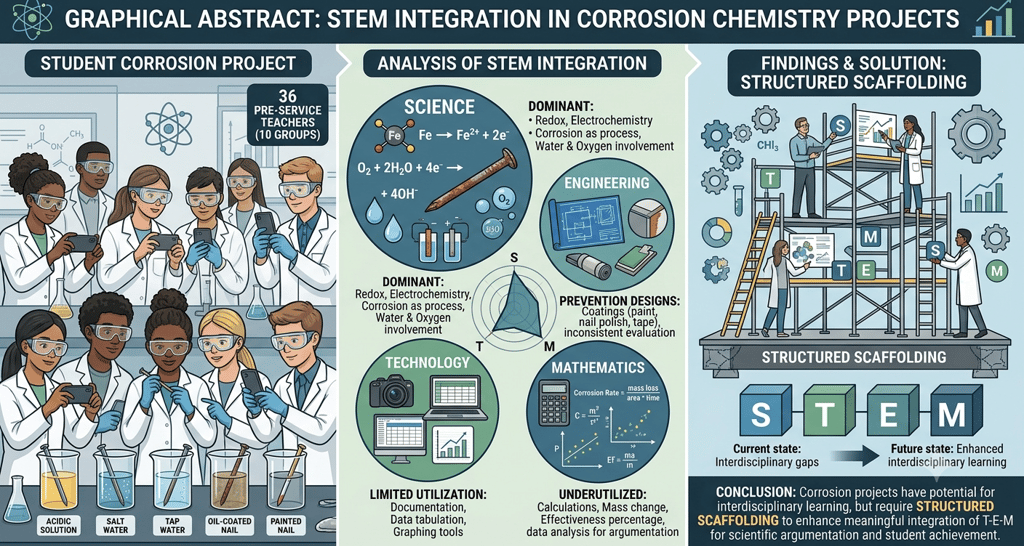
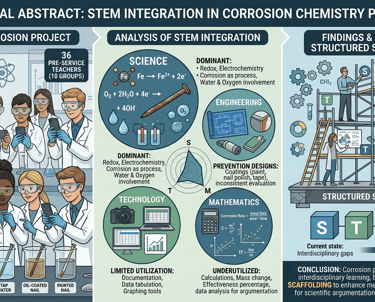
STEM Integration in Corrosion Projects of Pre-Service Chemistry Teachers
STEM-based learning is important in chemistry education because it connects scientific concepts with real-world problem solving. However, STEM implementation in laboratory courses is often dominated by science content, while technology, engineering, and mathematics are not always integrated meaningfully. This study aimed to analyze STEM integration in students’ corrosion project reports and examine its alignment with individual learning achievement in a Solution Chemistry and Laboratory course. A descriptive qualitative approach supported by quantitative data was used. The participants were 36 pre-service chemistry teachers divided into ten project groups. Data were collected from project reports, group project scores, final examination scores, and final course grades. The reports were analyzed using STEM integration indicators. The findings showed that science was the most dominant component, particularly in explaining corrosion as a redox and electrochemical process involving water, oxygen, electrolytes, and acidic solutions. Engineering appeared through corrosion prevention designs using oil, nail polish, and adhesive tape, although design evaluation was inconsistent. Technology was mostly limited to documentation, tables, and simple graphs. Mathematics appeared in scoring, mass change, effectiveness percentage, graphs, and corrosion rate, but was not consistently used for scientific argumentation. This study implies that corrosion projects can support interdisciplinary STEM learning but require structured scaffolding.