VIREACT: An Intelligent Virtual Laboratory Pioneering Boundless and Sustainable Chemistry Education
cite-chem
3/4/20262 min read
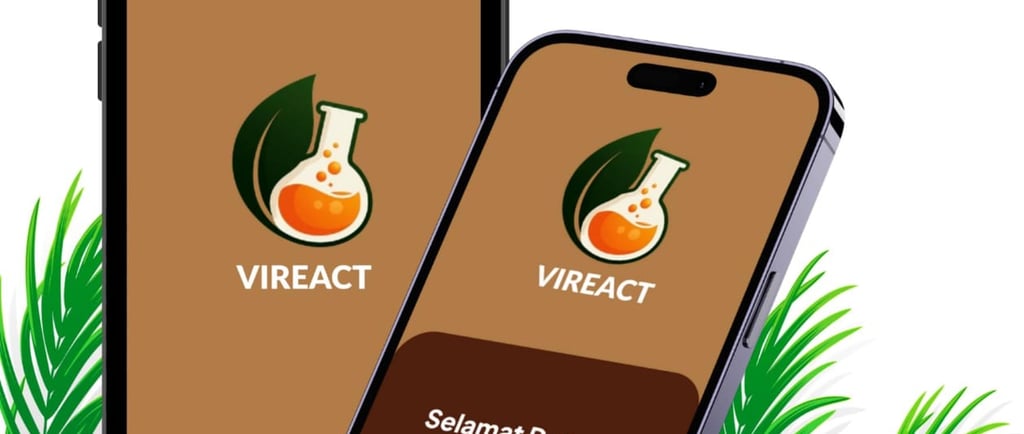
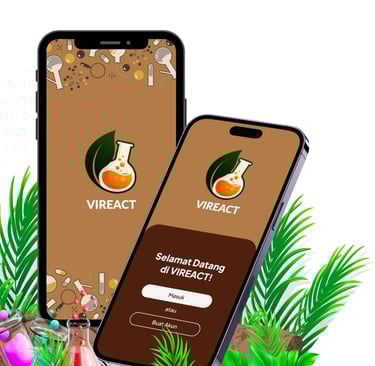
The scarcity of adequate chemical laboratory facilities frequently acts as a barrier for students attempting to grasp fundamental concepts concretely, particularly those related to reaction rates. In many educational settings, the absence of proper infrastructure compromises the effectiveness of experimental learning and overall classroom comprehension. To address this critical educational challenge, an innovative digital learning medium, VIREACT, has emerged as a groundbreaking solution.
Designed as a 21st century virtual laboratory platform, VIREACT facilitates the study of chemical reaction rates through highly immersive and realistic digital experiment simulations. Developed by a team of young innovators (Ulfa Rahmawati, Rency Kireina Jovanka, Ni Luh Isma Oktya Ariasih, and Khalilullah Nuraini) under the supervision of Nur Candra Eka Setiawan, the application provides a fully online, interactive alternative to traditional hands on learning.
The core ingenuity of VIREACT lies in its capacity to deliver a practical experience that mirrors a real world laboratory while being significantly safer and more environmentally conscious. Through the platform interface, users can directly manipulate critical variables affecting reaction rates, such as temperature, concentration, and catalysts, to observe their corresponding effects. Notably, these simulations are firmly grounded in the principles of Green Chemistry. The system actively guides users in selecting materials and experimental procedures that minimize chemical waste, thereby fostering a profound awareness of sustainable scientific practices.
Beyond advanced 3D laboratory visualization, VIREACT’s sophistication is further enhanced by the integration of Artificial Intelligence (AI). This intelligent feature functions as a digital tutoring assistant capable of analyzing users’ learning difficulties in real time. When the system detects unfamiliar chemical terms or misunderstood concepts, the AI automatically provides contextual explanations along with relevant supplementary references. This technological integration transforms the learning process into a highly adaptive and personalized experience, carefully tailored to each student’s pace of comprehension.
Ultimately, the deployment of the VIREACT platform is anticipated to be more than a temporary solution to the lack of physical infrastructure in schools. This educational medium is projected to pioneer a new ecosystem of chemistry education, one that is inherently safe, free from the risks associated with hazardous waste, and technologically advanced to support the future of science education.